Home » Emergency Dental Care » 7 Signs You Need Emergency Dental Care in Edmonton
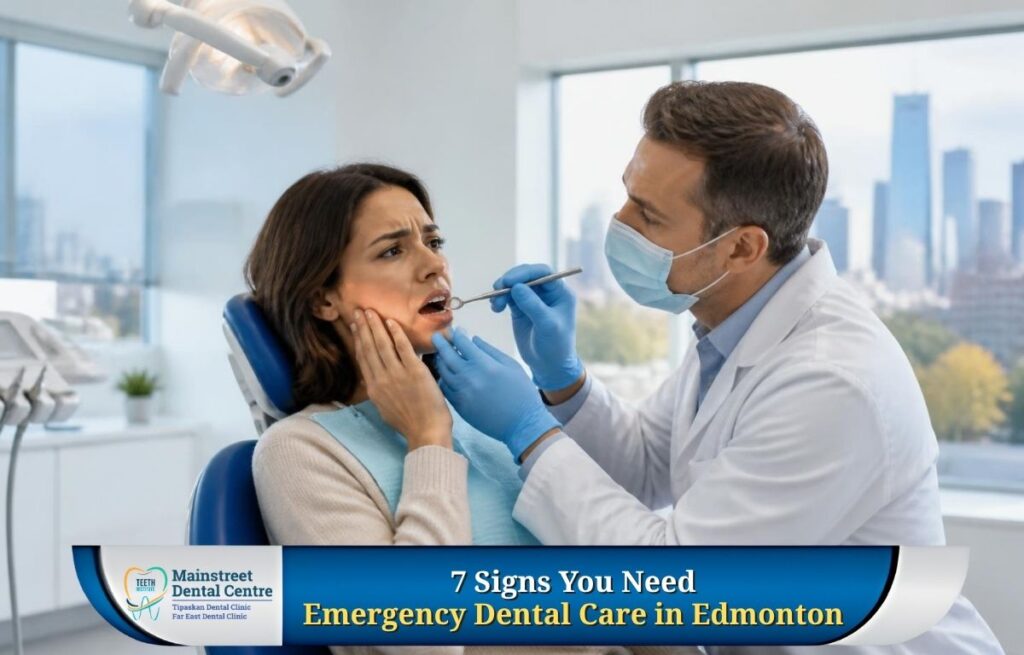
A dental problem does not always happen at a convenient time. A sudden toothache can become intense overnight, a tooth can break during a meal, or an injury can cause unexpected damage. When this happens, knowing whether you need urgent dental care can help you take the right next step.
Not every dental issue requires an emergency appointment. However, severe pain, significant swelling, dental trauma, infection, or serious tooth damage should not be ignored.
If you are searching for an Edmonton emergency dentist, understanding the warning signs can help you decide when prompt professional care is appropriate.
Mainstreet Dental Clinic provides emergency oral care for patients experiencing urgent dental concerns in Edmonton. When possible, the clinic aims to accommodate same-day emergency appointments based on availability and the patient’s needs.
A dental emergency is generally a problem that needs prompt professional assessment because delaying treatment could lead to worsening pain, further damage, or complications.
Common urgent dental concerns include:
The severity of your symptoms matters. A small chip without pain may be able to wait for a regular appointment, while a broken tooth with severe pain may need immediate attention.
If you are uncertain, contacting a dental professional can help you determine the appropriate next step.
A strong toothache is one of the most common reasons people look for an emergency dentist in Edmonton.
Dental pain can have different causes, including:
Pain that is severe, persistent, worsening, or interfering with sleep and daily activities deserves professional attention.
Pain medication may temporarily reduce discomfort, but it does not address the underlying cause.
If your toothache continues or becomes more intense, an emergency dental assessment can help identify the problem and determine appropriate treatment.
For additional information, read our guide to emergency dental care in Edmonton.
A damaged tooth can happen because of an accident, sports injury, biting something hard, tooth decay, or general weakening.
Not every chip is an emergency. A small cosmetic chip without pain may be suitable for a regular appointment.
However, urgent care may be appropriate when:
Prompt assessment can help prevent additional damage.
Depending on the condition of the tooth, treatment may involve bonding, a filling, a crown, root canal treatment, or another restorative option.
If you have broken a tooth, see our broken tooth emergency guide for Edmonton for additional information.
A completely knocked-out permanent tooth is a time-sensitive dental emergency.
If this happens, try to remain calm and handle the tooth carefully. Hold it by the crown rather than the root.
If the tooth is dirty, gently rinse it without scrubbing. Keep it moist and seek professional dental care as quickly as possible.
Do not delay treatment simply because there is little pain. A knocked-out tooth requires prompt assessment.
If you cannot get to a dental professional immediately, contact the clinic for guidance about what to do while travelling for care.
Swelling can be a sign of an infection or another dental problem that requires prompt treatment.
You may notice swelling around:
Swelling may occur along with tooth pain, a bad taste, fever, tenderness, or drainage.
A dental infection should not be ignored. It can become more serious if the underlying cause is not treated.
If you have severe facial swelling or difficulty breathing or swallowing, seek emergency medical attention immediately.
For urgent dental concerns, you can also review our emergency oral care services in Edmonton.
A dental infection can develop inside a tooth or around the surrounding tissues.
Possible warning signs include:
Some infections may not cause obvious symptoms at first. This is one reason regular dental examinations are important.
If you suspect an infection, do not rely on pain relief alone. A dentist needs to identify the source of the infection and determine appropriate treatment.
Depending on the condition, treatment may include root canal therapy, drainage, restorative treatment, or extraction.
You can learn more about root canal treatment in Edmonton if an infected or damaged tooth may require treatment inside the tooth.
A lost filling or crown may not always seem like an emergency. However, the exposed tooth can become sensitive and vulnerable to additional damage.
You may need prompt dental attention if:
Keep the restoration if you still have it and bring it to your appointment. Your dentist can determine whether it can be repaired or needs to be replaced.
If a crown is needed to protect a weakened tooth, learn more about dental crowns in Edmonton.
Dental injuries can happen during sports, falls, car accidents, physical activities, or everyday accidents.
An injury may affect:
Even if a tooth does not appear badly damaged, an examination may be necessary to identify problems that are not immediately visible.
A loose tooth, displaced tooth, broken tooth, significant bleeding, or severe pain after an injury should be assessed promptly.
If the injury also involves a serious head or facial injury, loss of consciousness, difficulty breathing, or uncontrolled bleeding, seek emergency medical attention.
The appropriate first-aid steps depend on the type of dental emergency.
For a broken tooth, gently rinse your mouth with water and avoid chewing on the affected side.
For swelling, a cold compress applied to the outside of the face may help with temporary discomfort.
For a knocked-out permanent tooth, handle it carefully by the crown, avoid touching the root, keep it moist, and seek dental care as quickly as possible.
If you have bleeding after an injury, gentle pressure with clean gauze may help. If bleeding is severe or does not stop, seek urgent medical attention.
Avoid putting aspirin directly on your tooth or gums because it can irritate oral tissues.
Most importantly, these steps are only temporary measures. They do not replace professional dental assessment.
A toothache does not automatically mean you need an emergency appointment.
However, you should seek prompt dental advice if the pain is:
A mild toothache that comes and goes may be suitable for a regular dental appointment, but it should still be evaluated if it continues.
Ignoring recurring pain can allow an underlying dental problem to progress.
Knowing the difference between urgent and routine dental care can help you choose the appropriate appointment.
If you are unsure, it is better to contact a dental professional and explain your symptoms.
Our guide Emergency Dentist vs. Regular Dentist provides more information about choosing the right type of dental appointment.
An emergency dental visit typically begins with an assessment of your symptoms and dental history.
Your dentist may ask:
The dentist will examine the affected area and may recommend dental X-rays or other diagnostic imaging when appropriate.
After identifying the likely cause, your dentist can explain the recommended treatment.
Depending on the problem, emergency treatment may include:
The exact treatment depends on your dental condition.
No.
Seeing an emergency dentist does not automatically mean that your tooth needs to be removed.
Whenever possible, the dentist may evaluate whether the natural tooth can be repaired or restored.
For example, depending on the condition, a damaged tooth may be treated with a filling, bonding, crown, or root canal.
Extraction may be considered when a tooth cannot be predictably restored or when removing it is necessary for your oral health.
If extraction is recommended, your dentist can discuss replacement options when appropriate.
You can also read our emergency tooth extraction guide for Edmonton.
Emergency dental costs vary because every dental problem is different.
The total cost can depend on:
For example, treating a minor broken filling is different from treating an infected tooth that requires root canal therapy or extraction.
Your dentist can explain the recommended treatment and associated costs after assessing your condition.
For more information, read How Much Does Emergency Dentistry Cost in Edmonton?.
Not every dental emergency can be prevented, but good oral care can reduce the risk of some problems.
Try to:
Preventive care can help identify problems before they become urgent.
Our guide to preventive dental care in Edmonton provides additional tips for protecting your teeth and gums.
Children can experience dental emergencies from falls, sports injuries, accidents, and dental infections.
A knocked-out permanent tooth, broken tooth, significant swelling, or severe toothache should be assessed promptly.
Parents should also remember that children may have difficulty explaining exactly what they are experiencing. Changes in eating, sleep, behaviour, or sensitivity may sometimes indicate dental discomfort.
If your child breaks a tooth, read our guide to child broken tooth emergencies in Edmonton.
Some dental problems require a dentist, while certain symptoms require immediate medical attention.
Seek emergency medical care if you experience:
These symptoms can indicate a broader medical emergency. Do not wait for a regular dental appointment if your safety is at risk.
Waiting may seem reasonable when symptoms are manageable, but some dental problems can worsen over time.
A cracked tooth can sustain additional damage. An untreated infection can become more serious. A damaged tooth can become increasingly difficult to restore.
Prompt assessment does not necessarily mean you will need extensive treatment. Instead, it gives your dentist an opportunity to understand the problem and discuss the most appropriate solution.
This is particularly important when pain, swelling, infection, or trauma is involved.
When you need urgent dental care, consider a clinic that can assess emergency problems and provide appropriate follow-up treatment.
Look for:
Choosing a clinic that can provide both emergency and follow-up care may make the overall treatment process easier.
Mainstreet Dental Clinic provides general, restorative, family, cosmetic, and emergency oral care for patients in Edmonton.
You can learn more about the practice through the Mainstreet Dental Clinic About Us page.
Severe tooth pain, significant swelling, dental infections, serious tooth damage, knocked-out permanent teeth, dental trauma, and uncontrolled oral bleeding may require urgent dental assessment.
Yes. Severe or persistent tooth pain should be evaluated by a dental professional because it may be caused by decay, infection, inflammation, a cracked tooth, or another dental problem.
Depending on the severity of the damage, a broken tooth may be repairable with a filling, bonding, crown, root canal treatment, or another restorative procedure.
Handle the tooth by the crown, avoid touching the root, keep it moist, and seek professional dental care as quickly as possible.
Significant swelling can indicate infection and should be assessed promptly. If swelling affects breathing or swallowing, seek emergency medical care immediately.
A lost crown may require prompt dental care, especially if the underlying tooth is painful, sensitive, damaged, or exposed.
No. Depending on the condition of the tooth, a dentist may be able to repair or restore it with a filling, crown, root canal, or another treatment.
Mainstreet Dental Clinic aims to accommodate emergency dental cases with same-day appointments whenever possible. Availability can vary, so patients should contact the clinic directly.
Dental emergencies can be stressful, but knowing the warning signs can help you act sooner.
If you are experiencing severe tooth pain, significant swelling, a broken or knocked-out tooth, signs of infection, or another urgent dental concern, professional assessment can help determine what is causing the problem and what treatment may be appropriate.
Mainstreet Dental Clinic
6578 28 Ave NW, Edmonton, AB T6L 6N3
Phone: +1 (780) 461-3500
Email: Info@mainstreetdentalclinic.ca
Hours: Monday to Saturday, 9:30 AM to 5:30 PM
Call Mainstreet Dental Clinic at +1 (780) 461-3500 to discuss your dental emergency and request an appointment.
Mainstreet Dental Clinic provides trusted, personalized dental care in Edmonton for children, families, and individuals. We offer general, cosmetic, restorative, pediatric, and emergency dental services.
© 2026 Mainstreet Dental Clinic – Smart Dentistry Needs Smart Design — Webital Technologies & Signages