Home » Restorative Dentistry » How Restorative Dentistry Prevents Future Dental Problems
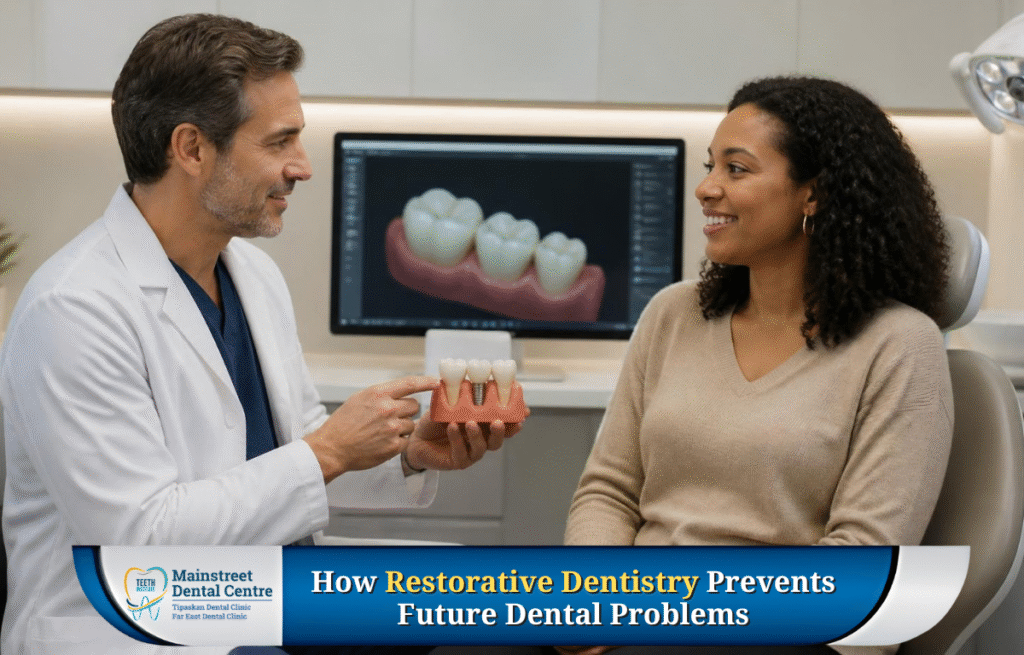
A small cavity, cracked tooth, worn filling, or damaged tooth may not seem like a major problem at first. However, leaving dental damage untreated can allow a minor issue to become more complicated over time.
Restorative dentistry is not only about repairing teeth after they become damaged. Appropriate restorative treatment can also help protect weakened teeth, restore normal function, and reduce the risk of additional dental problems.
For patients considering restorative dentistry in Edmonton, understanding how treatment can protect your teeth in the long term can help you make informed decisions about your oral health.
At Mainstreet Dental Clinic, restorative care can be part of a broader approach that combines treatment with preventive dental care and regular examinations.
Restorative dentistry focuses on repairing teeth that have been affected by decay, damage, infection, wear, or tooth loss.
Depending on the condition of your teeth, restorative treatment may include:
The goal is to restore the affected tooth or replace missing tooth structure while helping you maintain normal oral function.
Restorative treatment is often most effective when a problem is identified before it becomes more extensive.
For an overview of available care, visit tooth replacement and restoration in Edmonton.
Restorative treatment addresses existing dental damage, but its benefits can extend beyond the immediate repair.
Depending on the treatment, restoring a damaged tooth may help:
The specific benefits depend on the condition of your teeth and the treatment recommended by your dentist.
Tooth decay can progress if it is not treated.
A small cavity may initially cause little or no discomfort. As decay moves deeper into the tooth, however, it can weaken the tooth and potentially affect the inner tissues.
A dental filling can remove the decayed portion and restore the affected area.
Early treatment may help prevent the cavity from progressing to a point where more extensive treatment is required.
This is one reason regular dental examinations are important even when your teeth feel fine.
Learn more about how general dentistry helps prevent cavities in Edmonton.
A tooth that has lost significant structure may be more vulnerable to additional damage.
For example, a tooth with extensive decay, a large filling, a significant crack, or previous root canal treatment may require additional protection.
A dental crown covers the affected tooth and can help restore its shape and function.
By protecting a weakened tooth, a crown may help reduce the risk of further structural damage. Whether a crown is appropriate depends on the individual tooth and its condition.
You can learn more about dental crowns in Edmonton.
When decay or damage reaches the inner portion of a tooth, infection can develop.
A tooth infection may cause:
In some cases, root canal treatment can address the affected tissue inside the tooth and allow the natural tooth to remain in place.
Treating an affected tooth promptly may help prevent the infection from becoming more complicated.
Read more about root canal treatment in Edmonton.
A cracked or fractured tooth may become more vulnerable when it is exposed to normal biting forces.
Not every crack requires the same treatment. Some minor damage may require limited repair, while more extensive damage may require a crown or other restorative treatment.
The important point is that a damaged tooth should be assessed rather than ignored.
If you continue chewing on a damaged tooth without addressing the problem, additional tooth structure may become compromised.
Early evaluation allows a dentist to determine whether the tooth can be restored and what type of treatment may be appropriate.
A missing tooth can affect more than the appearance of your smile.
Depending on the location of the missing tooth, tooth loss can affect:
Restorative dentistry can include tooth replacement options such as bridges and dental implants.
Replacing a missing tooth may help restore function and reduce some of the challenges associated with an untreated gap.
Learn more about dental bridges in Edmonton or explore dental implants as a tooth replacement option.
Teeth can become worn over time.
Grinding, clenching, acidic foods and drinks, and other factors can contribute to tooth wear.
When significant tooth structure is lost, the teeth may become more vulnerable to sensitivity, fractures, and changes in how the upper and lower teeth meet.
A dentist can evaluate the cause and extent of tooth wear and determine whether restorative treatment is appropriate.
However, restoring worn teeth is only one part of managing the problem. Identifying the cause and following preventive recommendations are also important.
A damaged tooth may change the way you chew.
You might avoid using one side of your mouth because of pain or sensitivity. Over time, this can make eating less comfortable.
Restorative treatment aims to restore the affected tooth so it can function appropriately.
Depending on the situation, repairing or replacing a damaged tooth may help improve:
Your dentist can assess your bite and recommend treatment based on your specific needs.
Many dental emergencies begin with problems that could potentially have been identified earlier.
For example, an untreated cavity may eventually cause severe pain. A weakened tooth may fracture. An untreated dental infection may result in swelling.
Restorative treatment can address existing damage before it progresses further.
However, restorative treatment should not be viewed as a replacement for preventive care. Regular dental examinations remain important for identifying new problems and monitoring existing restorations.
If you experience sudden severe pain, swelling, a broken tooth, or another urgent concern, review emergency dental care in Edmonton.
One important goal of modern restorative dental care is to preserve natural teeth whenever they can be predictably restored.
Depending on the condition of a tooth, treatment may involve:
The appropriate option depends on how much healthy tooth structure remains and whether the tooth can be restored successfully.
Preserving a natural tooth is not always possible, but timely dental care can give your dentist an opportunity to evaluate restorative options.
Dental restorations do not necessarily last forever.
Fillings, crowns, bridges, and other restorations can become worn, damaged, loose, or affected by decay around the restoration.
Regular dental examinations allow your dentist to monitor existing dental work.
If a restoration shows signs of deterioration, addressing it may help prevent additional damage to the underlying tooth.
This is particularly important when a restoration has become loose or the tooth underneath has developed new decay.
Learn more about the long-term benefits of high-quality dental restorations.
Restorative and preventive dentistry serve different purposes, but they work best together.
Restorative dentistry addresses existing problems such as decay, broken teeth, infection, and tooth loss.
Preventive dentistry focuses on reducing the risk of future problems through regular examinations, professional cleanings, good oral hygiene, and early intervention.
For example, a dentist may restore a cavity with a filling and then recommend better brushing, flossing, dietary habits, and regular checkups to help prevent additional cavities.
This combination can support better long-term oral health.
For more information, explore preventive dental care in Edmonton.
Having a tooth restored does not mean that it no longer needs attention.
A restored tooth can still develop problems. The surrounding teeth and gums also remain vulnerable to decay and disease.
Regular dental examinations allow your dentist to:
Regular visits are especially useful when you have several restorations or a history of dental problems.
Read the benefits of regular dental checkups with a general dentist in Edmonton.
Professional treatment is only one part of maintaining your dental health.
You can help protect restored teeth by following good daily habits.
Brush your teeth twice daily with fluoride toothpaste and use a technique recommended by your dental professional.
Flossing or using another appropriate interdental cleaning method can help remove plaque from areas your toothbrush cannot reach easily.
Do not use your teeth to open packages, cut objects, or bite hard non-food items. These habits can damage both natural teeth and restorations.
Hard foods and objects can put excessive stress on weakened teeth and certain restorations.
If you grind or clench your teeth, discuss it with your dentist. Excessive pressure can contribute to tooth wear and restoration damage.
Regular examinations allow your dentist to monitor your teeth and existing restorations over time.
Contact your dentist if you notice changes involving a previously restored tooth.
Warning signs can include:
Do not assume that discomfort will disappear on its own.
A professional assessment can determine whether the restoration or the underlying tooth needs attention.
Consider scheduling an evaluation with a restorative dentist in Edmonton if you have:
A dentist can assess the condition of your teeth and explain which treatment options may be appropriate.
The goal of restorative dentistry is not simply to make a damaged tooth look better.
Appropriate treatment can help restore function, protect remaining tooth structure, and address problems before they become more complicated.
However, the long-term success of restorative care also depends on what happens after treatment.
Regular dental checkups, good oral hygiene, healthy habits, and prompt attention to new symptoms all play an important role.
Restorative dentistry works best as part of an ongoing approach to dental care rather than as a one-time solution.
Restorative dentistry can address existing damage and help protect weakened teeth, which may reduce the risk of additional problems. However, restorations do not guarantee that future dental problems will not occur. Regular preventive care is still essential.
No. Restorative dentistry can also address tooth loss, infection, extensive decay, worn teeth, and failing dental restorations.
A crown can cover and protect a significantly weakened tooth. Depending on the condition of the tooth, this may help protect the remaining structure from additional stress.
A filling removes the decayed portion of the tooth and restores the affected area. Treating decay before it progresses further may help avoid more extensive treatment.
Root canal treatment addresses infected or damaged tissue inside a tooth. Once the tooth is restored appropriately, maintaining good oral hygiene and attending regular dental examinations remain important.
Yes. Depending on your dental needs, options can include bridges, dental implants, and other tooth replacement solutions.
There is no fixed lifespan for every restoration. Durability can depend on the type of restoration, location of the tooth, oral hygiene, bite forces, diet, grinding or clenching, and ongoing dental care.
Yes. Restored teeth can still develop problems, and restorations can become worn or damaged. Regular examinations allow your dentist to monitor both the restoration and surrounding teeth and gums.
Restorative dentistry can do more than repair an existing dental problem. By addressing decay, cracks, infection, weakened teeth, and tooth loss, appropriate treatment can help restore function and protect your oral health.
The best results come when restorative treatment is combined with regular dental examinations, preventive care, and good daily oral hygiene.
If you have a damaged tooth, an existing restoration that concerns you, or a dental problem that has been left untreated, a professional assessment can help you understand your options.
Mainstreet Dental Clinic
6578 28 Ave NW, Edmonton, AB T6L 6N3
Phone: +1 (780) 461-3500
Email: Info@mainstreetdentalclinic.ca
Hours: Monday to Saturday, 9:30 AM to 5:30 PM
Call +1 (780) 461-3500 to schedule a consultation and discuss your restorative dental needs with Mainstreet Dental Clinic.
Mainstreet Dental Clinic provides trusted, personalized dental care in Edmonton for children, families, and individuals. We offer general, cosmetic, restorative, pediatric, and emergency dental services.
© 2026 Mainstreet Dental Clinic – Smart Dentistry Needs Smart Design — Webital Technologies & Signages