Home » Pediatric Dentistry » Top Tips for Maintaining Oral Hygiene Between Dental Visits
Your dental visits are important, but what you do between appointments has an even bigger role in maintaining your everyday oral health.
Brushing your teeth, cleaning between them, making thoughtful food choices, and paying attention to changes in your mouth can help keep your teeth and gums in better condition between professional dental visits.
Good oral hygiene in Edmonton starts with consistent daily habits. Even simple routines can make a meaningful difference when you follow them regularly.
Professional dental examinations and cleanings can remove buildup and help your dentist identify potential problems. However, plaque begins to accumulate again after you clean your teeth.
Without regular home care, plaque can contribute to:
Daily oral hygiene helps manage plaque between professional appointments and supports the health of your teeth and gums.
For more information about ongoing care, explore preventive dental care in Edmonton.
Brushing twice a day is one of the most important parts of an effective oral hygiene routine.
Brush in the morning and before bed, using fluoride toothpaste and a soft-bristled toothbrush.
When brushing:
Brushing too hard does not necessarily clean your teeth better. Excessive pressure can irritate your gums and contribute to tooth wear.
A toothbrush cannot effectively clean every area between your teeth.
Floss or use an appropriate interdental cleaning method to remove plaque and food particles from these spaces.
Daily interdental cleaning can help keep the areas between your teeth and along the gumline cleaner.
If traditional floss is difficult to use, ask your dentist or dental hygienist about alternatives that may work better for you.
Plaque can accumulate along the area where your teeth meet your gums.
When brushing, gently angle your toothbrush toward the gumline and clean this area carefully.
Healthy gums generally should not consistently bleed during routine brushing and cleaning. If you notice persistent bleeding, swelling, tenderness, or other changes, discuss them with your dentist.
For patients concerned about gum health, see gum disease treatment in Edmonton.
Toothbrush bristles become worn over time and may not clean as effectively.
Replace your toothbrush or toothbrush head when the bristles become frayed or approximately every three to four months, or sooner if recommended by your dental professional.
If the bristles become damaged quickly, you may also want to discuss your brushing technique with your dentist.
Water can be a simple addition to your daily oral hygiene routine.
Drinking water can help rinse away some food particles and can support saliva production, which naturally helps protect the mouth.
Choosing water instead of frequently consuming sugary drinks can also reduce repeated exposure of your teeth to sugars.
Sugar itself is not the only consideration. The frequency with which your teeth are exposed to sugary foods and drinks also matters.
Frequent snacking on sugary foods or regularly sipping sweetened beverages can give oral bacteria more opportunities to produce acids that contribute to tooth decay.
You do not necessarily need to eliminate every food you enjoy. Instead, aim for balanced choices and avoid constantly exposing your teeth to sugary drinks and snacks throughout the day.
Acidic beverages and foods can contribute to enamel erosion when teeth are exposed to them frequently.
Examples may include certain soft drinks, energy drinks, sports drinks, and acidic juices.
If you consume acidic drinks, consider limiting how frequently you have them and avoid holding or swishing them around your mouth.
If you have concerns about enamel wear or sensitivity, speak with your dentist.
Your teeth are designed for eating, not opening packages or cutting objects.
Using your teeth to:
can increase the risk of chips, cracks, or other dental damage.
A small habit can sometimes result in an unexpected dental appointment.
If you participate in contact sports or activities where your mouth could be injured, consider using an appropriate mouthguard.
A properly fitted mouthguard can help reduce the risk of dental injuries during certain activities.
Ask your dentist about the type of mouthguard that may be suitable for your needs.
One of the most important oral hygiene habits is knowing when something does not feel normal.
Contact your dentist if you notice:
Not every symptom means you have a serious dental problem, but persistent changes deserve professional evaluation.
Your tongue can collect bacteria and debris.
Gently brushing your tongue with your toothbrush or using a tongue cleaner can be part of your daily oral hygiene routine.
This may also help improve breath freshness.
Avoid aggressive scraping or brushing. Gentle cleaning is generally sufficient.
There are many dental care products available, including different types of toothbrushes, toothpastes, floss, interdental cleaners, and mouth rinses.
You do not necessarily need every product.
The best routine is one you can perform consistently and correctly.
Your dentist or dental hygienist can recommend products based on factors such as:
If you have fillings, crowns, bridges, implants, or other restorations, continue cleaning around them carefully.
Dental restorations can restore damaged or missing teeth, but they still require proper maintenance.
Food and plaque can accumulate around certain restorations if they are not cleaned appropriately.
Learn more about tooth replacement and restoration in Edmonton.
The most effective oral hygiene routine is one you can maintain every day.
A simple routine could look like:
Morning:
Brush with fluoride toothpaste and clean your tongue.
During the day:
Drink water regularly and be mindful of frequent sugary snacks and drinks.
Evening:
Clean between your teeth and brush thoroughly before going to bed.
Consistency matters more than having a complicated routine that is difficult to maintain.
Good home care does not replace professional dental care.
During a dental appointment, your dentist can examine areas that may be difficult for you to evaluate at home. Professional cleaning can also remove hardened tartar that cannot be removed effectively with normal brushing.
Regular appointments can help identify dental problems earlier and allow your dental team to monitor your oral health over time.
Read about the benefits of regular dental checkups in Edmonton.
If you feel your current routine could be better, start with the basics rather than trying to change everything at once.
Focus on these five habits:
Once these habits become consistent, your dentist can help you identify any additional changes that may benefit your individual oral health.
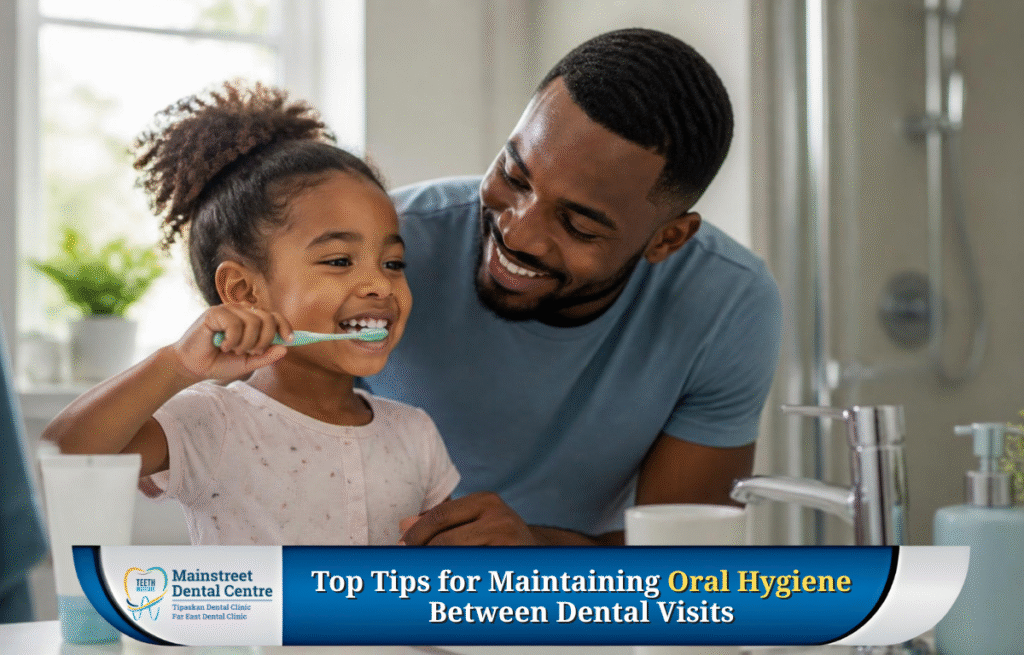
Children need help developing good dental habits.
Parents can encourage healthy routines by:
Children may not have the coordination needed to brush effectively on their own at first, so parental supervision can be important.
For more information, see children’s dentistry in Edmonton.
Occasional bleeding can happen for different reasons, including irritation or inflammation.
However, persistent bleeding should not simply be ignored.
Continue using gentle oral hygiene techniques and speak with your dentist if the bleeding continues or is accompanied by swelling, tenderness, or other symptoms.
Your dental professional can determine what may be contributing to the problem and whether further evaluation is needed.
No.
Good oral hygiene can reduce the risk of certain dental problems, but it cannot guarantee that you will never develop cavities, gum disease, tooth damage, or other oral health concerns.
Factors such as genetics, medications, diet, existing dental conditions, age, and other individual circumstances can also affect oral health.
That is why home care and professional dental care work together.
For most people, brushing twice a day with fluoride toothpaste is recommended. Your dentist can provide personalized advice based on your oral health.
Yes. Brushing cannot effectively clean every area between the teeth. Cleaning between your teeth helps remove plaque and debris from these spaces.
Replace your toothbrush or toothbrush head when the bristles become worn or frayed, generally around every three to four months, or sooner if needed.
No. Mouthwash should not be considered a replacement for brushing and cleaning between your teeth. Depending on the product, it may provide an additional benefit as part of a broader oral hygiene routine.
For most people, a fluoride toothpaste is an appropriate choice for daily brushing. If you have sensitive teeth or another specific concern, your dentist can recommend a suitable product.
Bleeding can occur when gums are inflamed or irritated, particularly if you have not been cleaning between your teeth regularly. Persistent bleeding should be discussed with your dentist.
Brush twice daily, clean between your teeth, use fluoride toothpaste, limit frequent sugary foods and drinks, and maintain regular dental examinations.
Daily home care is essential, but professional dental examinations and cleanings are also important. Your dental team can identify problems that may not be obvious at home and remove hardened tartar.
Your dental appointment is only one part of your oral health routine. What you do every day between visits can have a significant impact on the condition of your teeth and gums.
Simple habits such as brushing twice a day, cleaning between your teeth, choosing water more often, limiting frequent sugary snacks, and paying attention to changes in your mouth can support better oral health.
Most importantly, don’t wait for severe pain before seeking dental care. Regular examinations allow your dentist to monitor your oral health and address concerns when appropriate.
Mainstreet Dental Clinic provides general, preventive, restorative, and family dental care for patients in Edmonton.
Mainstreet Dental Clinic
6578 28 Ave NW, Edmonton, AB T6L 6N3
Phone: +1 (780) 461-3500
Email: Info@mainstreetdentalclinic.ca
Hours: Monday to Saturday, 9:30 AM to 5:30 PM
Call +1 (780) 461-3500 to schedule your dental appointment and discuss your oral health needs with the Mainstreet Dental Clinic team.
Mainstreet Dental Clinic provides trusted, personalized dental care in Edmonton for children, families, and individuals. We offer general, cosmetic, restorative, pediatric, and emergency dental services.
© 2026 Mainstreet Dental Clinic – Smart Dentistry Needs Smart Design — Webital Technologies & Signages